The Fluidity of Medium - Lyn Dambyo
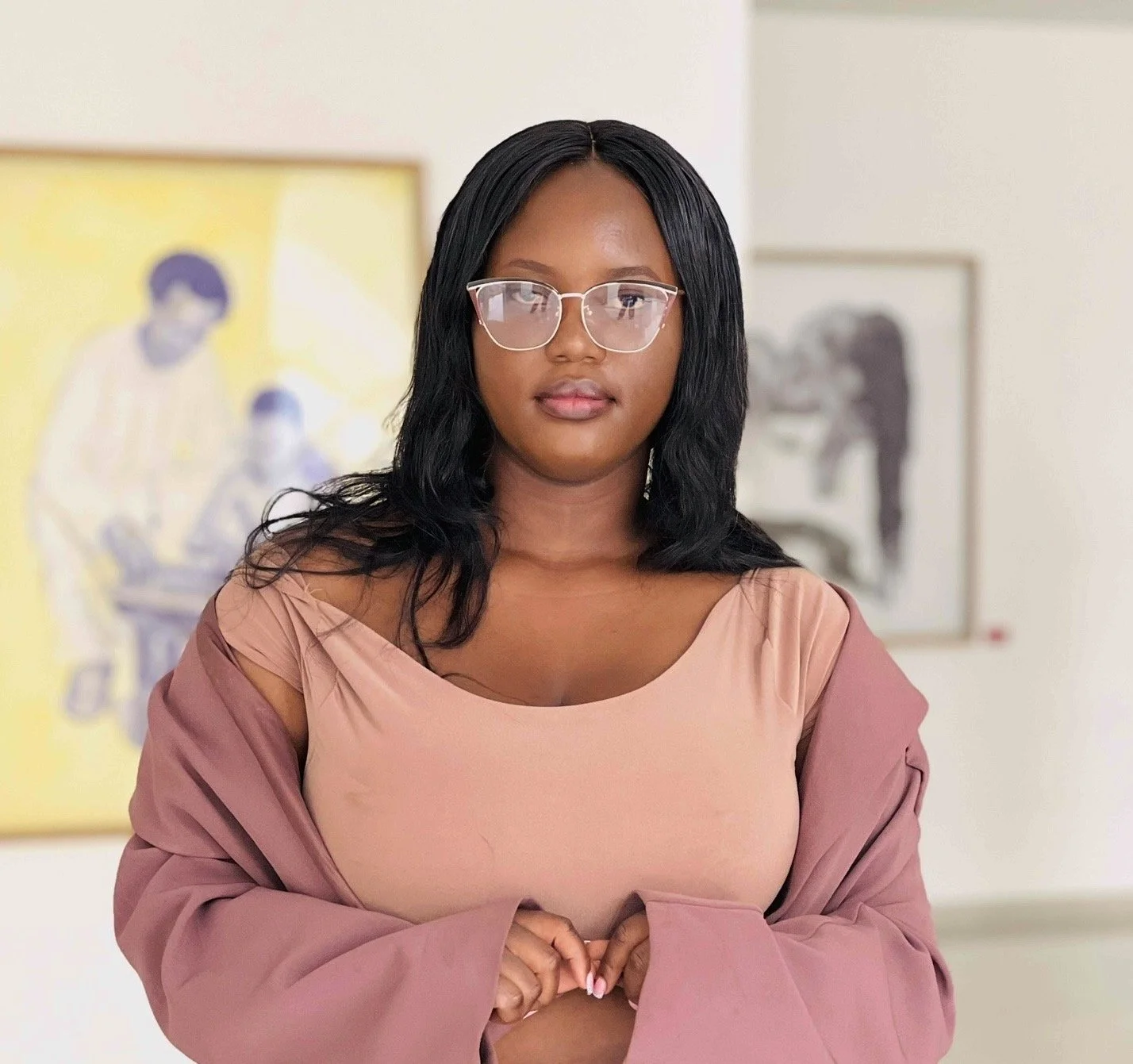
The beauty of visual art sometimes lies in the possibility of using materials that are not conventionally used to produce art: Pencils, canvas, paper and oil paints. Strings are Lyn Dambyo, a Ugandan multidisciplinary artist primary medium.
She also works with interior design, and creative expression that intersects with mental health and storytelling. Her work often explores emotion, spirituality, and human experience through textured and intentional design.
Can You Walk me through Your Journey as an Artist?
I’m an introvert and a lot of that comes from growing up as an only child which made me really reflective. I tend to think deeply about things and really put myself in other people’s shoes before I say or do something. At the same time, I love connecting with others especially when I feel at ease. I’m also really passionate about all forms of art and I’ve. I found that’s a huge part of how I see the world. I’m a lover of adventure, always ready to try out a new outdoorsy activity as a way of connecting with people.
What Led You to Choose this Path, and what did You Weigh before Starting?
I’ve always known I wanted to do art, it’s something I’ve been drawn to for as long as I can remember. But academically, I took a slightly different path. I studied Business Statistics at Makerere University and even went on to pursue CPA which I eventually paused, so I did seriously consider going into finance.
At one point, I actually thought auditing would be a great fit for me. I liked the structure, the attention to detail and the analytical side of it. So if I hadn’t ended up in the creative field, I most likely would have gone down that path. That said, even while I was studying and exploring those options, art was always present in my life. Eventually, I realized it wasn’t just an interest but something I genuinely wanted to build my career around.
What Fuels Your Passion for the Work You do?
I’d say what really motivates my work is the desire to create meaning and connection through art. I’m someone who naturally thinks deeply and reflects a lot so art becomes a way for me to process emotions, experiences, and even the perspectives of other people.
I’m also driven by how powerful art can be beyond just visuals, it can communicate what words sometimes can’t. That’s something I’m very intentional about, especially with my string art. I love the idea of taking something complex, whether it’s an emotion, a story, or a concept and translating it into something people can see and feel.
At the same time, I’m motivated by impact. I care about how my work can reach people, especially in areas like mental health and community. I want my art to not just exist, but to resonate, to start conversations, and to create a sense of connection. And on a personal level, I’m simply driven by my love for the process itself, the patience, the detail and watching an idea slowly come to life from start to finish.
What Does Your Creative Process Typically look Like?
I’d describe my artistic process as both conceptual and hands-on, with a strong requirements, attention to detail from start to finish. It usually begins with a concept we want to bring to life. I take time to really think through the idea before moving into execution. Once the concept is clear, we create a template, either digitally using Archicad or by hand, depending on what the piece requires. After that, we print or finalize the sketch to match the exact size of the piece we’re working on.
Then we prepare the base by cutting plywood to size and applying a background material; this could be leather, cow skin, wallpaper, or other textures depending on the concept. We fix this onto the board using wood glue. Next, we place the printed or hand-drawn template onto the prepared surface and begin the nailing process. This is quite detailed; we carefully hammer in nails following the sketch, sometimes using hundreds or even thousands of nails to map out the design.
Once that’s complete, we remove the paper template so we’re left with just the nail outline. Then comes the stringing, which is where the piece really starts to come alive. We use different types and thicknesses of thread depending on the effect we want. The strings are woven around the nails repeatedly, building layers and depth until the original concept is fully expressed. Once the stringing is complete, we secure and tighten everything, making sure the work is clean and stable.
After that, we move into finishing that is adding binding along the edges for a neat look and assembling the frame, which we also handle ourselves. So overall, my process is very intentional and layered; it moves from idea, to structure, to texture, and finally to a fully realized piece that reflects the original concept.
In what Ways, if any, does Your Work Intersect with Activism?
Yes, I focus primarily on mental health activism. On my Linktree, the first link highlights mental health and well-being, leading to pages that advocate for support in this area. Beyond that, we run string art sessions designed to support mental health; both for adults, to engage their minds, and for children, providing mental health awareness.
Yes, social consciousness is a big part of my work. I’m very intentional about using art to support mental health, especially for children and adults who might not have easy access to these resources. Beyond that, I focus on collaboration with other creatives and seeing that I don’t grow on an individual level but rather the creative community as a whole by creating opportunities, skills training and community engagement through my projects.
So my work isn’t just about making art, it’s about making a positive impact.
How do You Stay Motivated during Moments when Recognition is Lacking
On days I don’t feel appreciated, I go back to why I started. Art has always been personal for me, it’s how I process things and express myself so even without recognition, it still matters. I also remind myself that not every phase is loud or celebrated. Some of the most important growth happens quietly. So I just keep showing up, even on those days. My muse is the emotion and experience that connect us as humans. I’m drawn to what a piece can make people feel. I love experimenting with different mediums to find the best way to communicate that emotion.
Have there Been Moments when You Questioned Continuing this Path?
Yes, I have considered it; especially during slower seasons when commissions are low and responsibilities don’t pause. Those moments can be challenging. But each time, I come back to the same realization: this work is more than just income for me, it’s something I genuinely care about. So instead of quitting, I chose to adapt. Over time, I expanded into interior décor, still within my creative space but in a way that aligns with what I do. That shift has helped me stabilize my income while also keeping me inspired, because it’s a broader field with constant opportunities to learn and grow.
What would You want a Newcomer to know as they Enter this Field?
I could share one piece of advice with someone just starting out, it would be to put yourself out there and to embrace collaboration. I wish I had done both sooner. In my work, I rarely say ‘I’ you’ll usually hear me say ‘we’ because most of my pieces are the result of teamwork with fellow creatives.
Collaboration has been at the heart of my practice and has pushed my work further than I could have gone alone. For any creative, being willing to connect, learn from, and create with others is one of the best things you can do for yourself.